
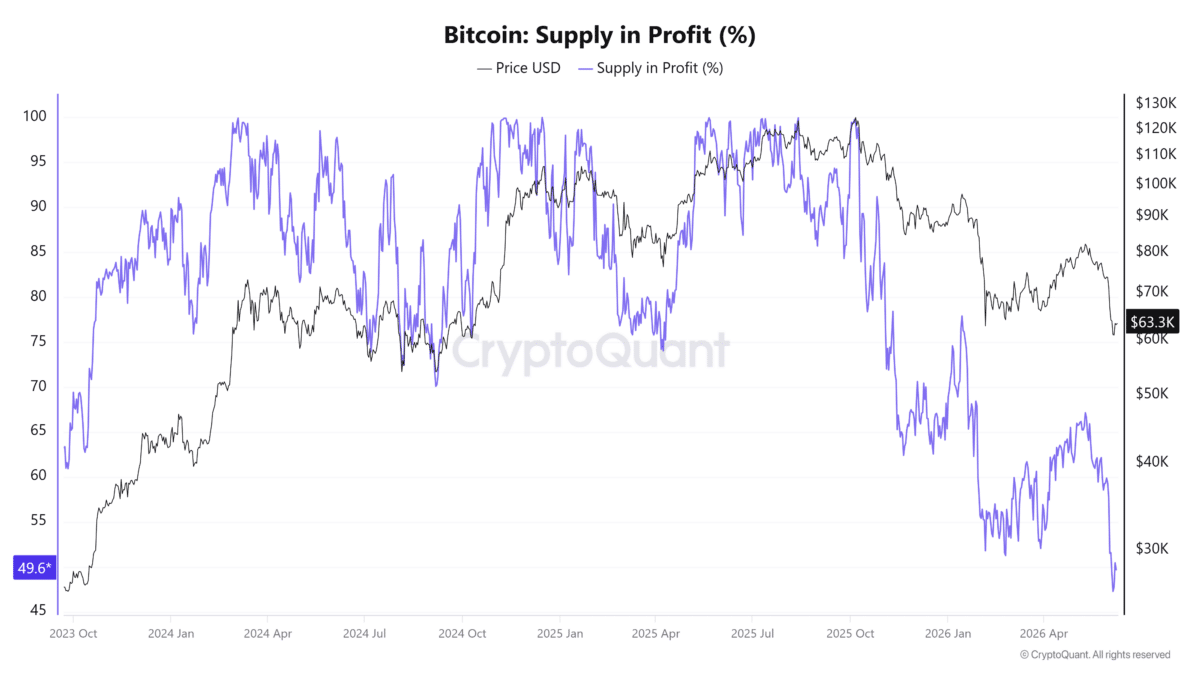
As of June 9, 2026, Bitcoin (BTC) is trading in a tight range around $63,000–$63,400, posting modest gains of about 1.2% in the last 24 hours. The leading cryptocurrency has clawed back from a sharp two-month low near $59,100 earlier in June, following a brutal 50% drawdown from its all-time high of approximately $126,198 set in October 2025.
Market capitalization hovers near $1.27 trillion, with 24-hour trading volume around $34 billion and circulating supply at roughly 20.06 million BTC out of a maximum 21 million.
This stabilization at the psychologically important $60,000–$63,000 zone has sparked intense debate among analysts: Is Bitcoin building a base for recovery, or is this merely a pause in a longer bear market cycle? With U.S. spot Bitcoin ETFs experiencing heavy outflows and macro headwinds persisting, the path ahead remains highly uncertain.
Recent Price Action and Market Snapshot
Bitcoin’s journey in 2026 has been challenging. After peaking late last year amid post-halving optimism and institutional inflows, BTC entered a prolonged correction. It plunged through $63,000 in early June, triggering over $3 billion in liquidations across derivatives markets between June 4–6 alone. The rapid drop from around $67,000 to $59,100 in 48 hours wiped out leveraged positions, with longs bearing the brunt.
Yet, the asset has shown resilience, rebounding above $62,000 and holding key support. On-chain metrics paint a picture of capitulation nearing exhaustion: approximately 50% of circulating supply is now in profit—a level that historically aligned with cycle lows in 2019 and 2022.

Moreover, long-term holders (coins unmoved for over a year) represent about 61% of supply, signaling strong conviction despite retail caution.
Key Drivers: ETF Outflows, Institutional Buying, and Macro Pressures
A primary headwind has been U.S. spot Bitcoin ETFs, which posted record outflows totaling over $5.4 billion in the past four weeks, including a $1.72 billion weekly exit ending June 6.
BlackRock’s IBIT led the pack with significant redemptions. This reflects profit-taking after 2025’s rally, capital rotation into AI stocks and upcoming IPOs like SpaceX, and broader risk-off sentiment.
Counterbalancing this, corporate accumulation continues. Strategy (formerly known as MicroStrategy) added 1,550 BTC for $101 million in early June at an average price of ~$65,300, bringing its holdings to 845,256 BTC. Despite a minor 32 BTC sale for cash management—its first since 2022—CEO Michael Saylor and team remain aggressively bullish, viewing dips as buying opportunities. Other corporations and whales have also absorbed supply.
Macro factors weigh heavily: elevated interest rates, equity volatility, geopolitical tensions, and delayed Federal Reserve rate cuts have pressured risk assets. Bitcoin’s correlation with Nasdaq has fluctuated, but it has underperformed gold and oil year-to-date in 2026.
“Bitcoin’s recent rebound shows there is still demand when prices pull back, but investors are not committing capital with the same level of confidence we saw earlier in the year,” said Daniel Reis-Faria, CEO of ZeroStack, in an exclusive statement shared with The Crypto Times.
“While a lot of attention has been placed on Strategy’s buying activity, the bigger factor remains the broader economic environment,” Daniel emphasized. “Investors are paying close attention to inflation and interest rate expectations ahead of next week’s FOMC meeting, as these factors influence how much risk they’re willing to take across all asset classes, including crypto.”
Technical Analysis: Key Levels and Patterns
From a chart perspective, Bitcoin is testing the upper end of a multi-month consolidation. Immediate resistance sits at $66,000–$67,000, followed by $72,000–$75,000. A clean breakout above these could target $85,000 and potentially retest $100,000 later in 2026, especially if ETF flows reverse.
Support remains critical at $60,000 (psychological floor), with stronger demand zones between $55,000–$58,000 and the 200-week moving average near lower levels.
Potential bullish reversal patterns on weekly charts, such as a doji or hammer, could form if selling pressure exhausts. However, failure to hold $60,000 could open the door to $50,000 or even $37,000–$40,000 in a deeper reset, testing historical cycle precedents.
CryptoQuant data further highlight thinning liquid supply on exchanges—the lowest since 2018—setting the stage for potential supply shocks on any demand surge.
Bullish Scenarios: Institutional Tailwinds and Adoption
Optimists argue the current phase is healthy consolidation post a parabolic 2025 run. Bernstein maintains a $150,000 target for 2026, citing intact store-of-value fundamentals, $12 billion in combined ETF and corporate inflows YTD (despite recent outflows), and regulatory progress like the CLARITY Act.
Longer-term drivers include maturing ETF products, potential U.S. strategic Bitcoin reserves under pro-crypto policies, and global adoption. Post-2024 halving effects continue to reduce new supply, while nations and corporations increasingly view BTC as digital gold.
Some forecasts see $175,000–$200,000 by mid-to-late 2026 if macro conditions ease, with average models pointing to $70,000–$90,000 by year-end.
“We’re still seeing long-term buyers step in at lower levels, which suggests confidence in Bitcoin hasn’t disappeared. However, many investors are waiting for clearer signals that inflation is moving in the right direction before increasing exposure,” Daniel said.
Bearish Risks: Extended Cycle Correction
Skeptics, including analyst Benjamin Cowen, caution that the bear market may extend into Q3–Q4 2026. Bitcoin has not yet breached its realized price (~$53,600), a level typically tested at true cycle bottoms.
Historical four-year cycles suggest deeper drawdowns (70–85%) before recovery, potentially targeting $40,000–$50,000 amid recession risks or prolonged high rates.
Continued ETF outflows, leverage unwinds, and competition from AI narratives could prolong pain. Altcoins have suffered more severely, with Bitcoin dominance elevated, indicating capital flight to safety within crypto.
“Seeing larger investors buy can help support the market, but stronger gains typically require broader participation from investors,” Daniel further amplified, adding, “market still has buyers, but demand has not been strong enough to support a more sustained recovery.”
Broader Implications for Crypto and Investors
This Bitcoin consolidation affects the entire market. Total crypto market cap sits around $2.27 trillion, with Ethereum and others lagging. Retail sentiment is fearful, creating opportunities for patient accumulators. However, volatility remains extreme—daily swings of 5%+ are common.
Among investors, long-term HODLers see this as another accumulation window, backed by Bitcoin’s scarcity (only ~1.9 million BTC left to mine) and network security. Traders, on the other hand, will be watching ETF flows, U.S. economic data (CPI, jobs), and on-chain metrics like MVRV ratio and Puell Multiple to solidify their strategies.
Bitcoin’s hold at $63,000 amid 2026’s challenges underscores its maturing resilience. Whether this marks the foundation for a renewed bull run or the midpoint of a grinding correction will depend on macro relief, institutional conviction, and technical breakthroughs.
Also read: Circle Brings 1:1 BTC-Backed cirBTC to Ethereum DeFi Markets