


Why is crypto down? Bitcoin crashed below $69,000 just now, dragging the crypto markets into another brutal selloff. Ethereum slipped below $2,000, while several major altcoins recorded losses exceeding 6%.
The decline comes as crypto faces a dangerous combination of shrinking dollar liquidity, institutional withdrawals, and aggressive leveraged selling. The situation is becoming increasingly uncomfortable. Investors are pulling capital from stablecoins and Bitcoin ETFs, leaving fewer buyers to absorb selling pressure. Once Bitcoin broke below $70,000, leveraged traders faced another wave of forced liquidations.

Billions Disappear From Stablecoin Supply
The biggest warning sign comes from the stablecoin market, where the amount of available dollar liquidity is shrinking rapidly. Glassnode reported that major stablecoin supply declined by $14.2 billion over 30 days. This is the sharpest decline since the 2022 bear market, when the Terra collapse triggered widespread capital withdrawals.
Total stablecoin supply has fallen below $280 billion, returning to levels last seen around September 2025. Meanwhile, CryptoQuant recorded a $6.6 billion decline in USDT market cap over 60 days through November 7. This is concerning because the USDT contraction exceeded twice the decline recorded following the FTX collapse in December 2022.
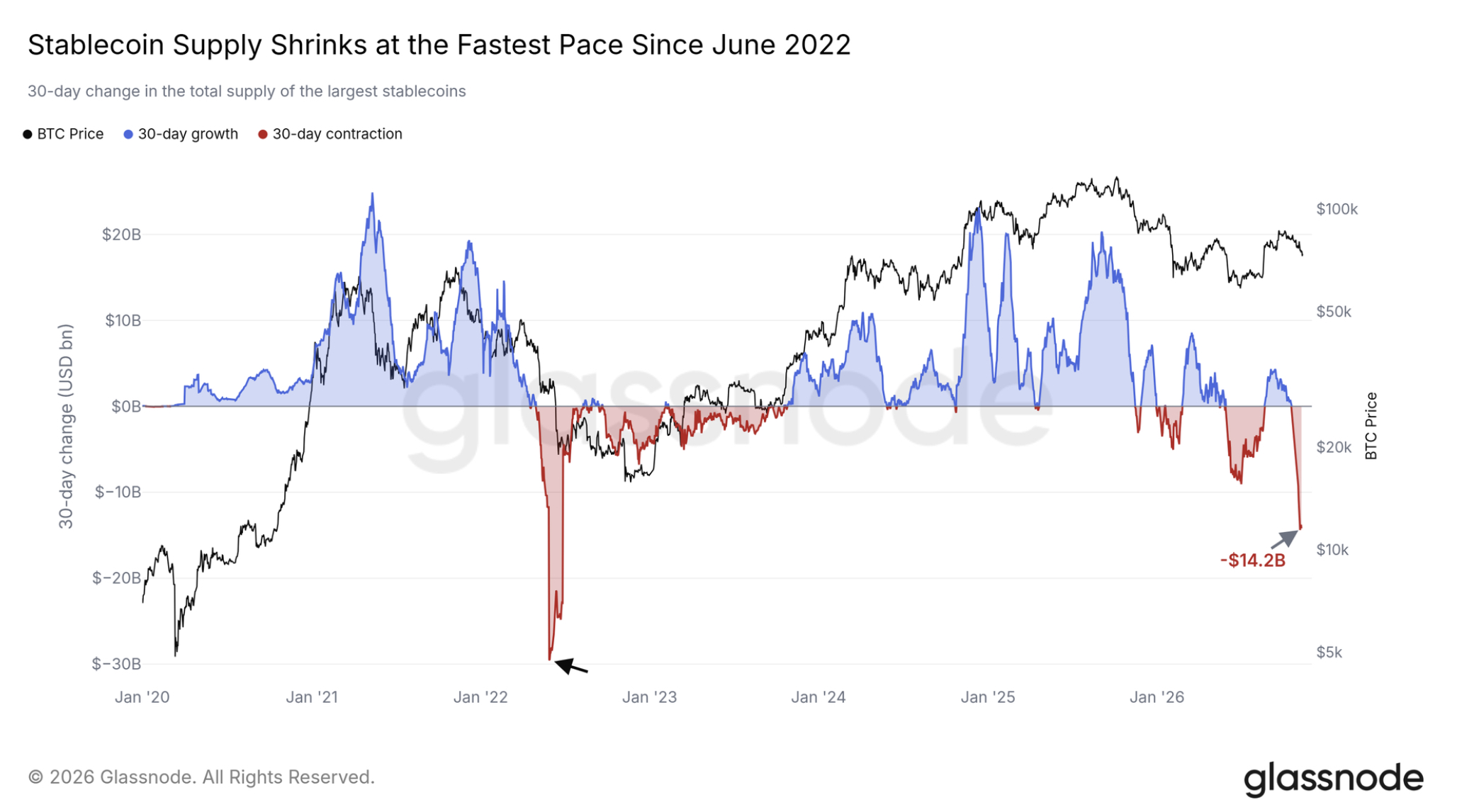
Stablecoins function as crypto’s cash reserves. Traders use USDT and USDC to move between exchanges, purchase crypto, and maintain liquidity without leaving the blockchain ecosystem. So, when investors redeem stablecoins for dollars, that purchasing power leaves the market. Glassnode itself warned that shrinking supply leaves less fuel available for another rally.
The liquidity problem is arriving alongside persistent institutional selling. US spot Bitcoin ETFs lost $1.6 billion across 20 trading sessions. US spot Bitcoin ETFs recorded $47.7 million in net outflows on November 12, extending their withdrawal streak to six consecutive trading sessions.
Bitwise’s BITB led withdrawals with $26.4 million, while Morgan Stanley’s MSBT recorded $3.3 million in inflows. Ethereum ETFs also showed at least $8 million in net outflows in November 12 data.
The combination creates an uncomfortable situation. Crypto is losing dollar liquidity while regulated investment products continue recording withdrawals. There are fewer fresh buyers available to support prices when sellers rush toward the exit.
Discover: The Crypto Presales This Q4 2026
Bitcoin Broke $70K Support, Crypto Crashes
The liquidity squeeze eventually reached the derivatives market, where falling prices triggered another wave of forced selling. Bitcoin plunged 7% over 24 hours to $68,400 in 15 minutes this morning. Ethereum dropped 6% to $1,920, while BNB declined 6.3% and XRP lost 3.5%.
Liquidations also hit $1.64 billion over 24 hours. Long positions accounted for $1.46 billion, with more than 175,000 traders losing their positions. The damage accelerated after Bitcoin lost the $70,000 level. Traders betting on a recovery suddenly faced liquidation thresholds, forcing exchanges to close leveraged positions.
These forced closures created a feedback loop that pushed prices lower and exposed more leveraged positions. Macro conditions are not helping, too. Stronger US inflation figures increased expectations of another Federal Reserve rate hike in December, which is almost certain now.
A stronger dollar and rising Treasury yields also weakened demand for speculative assets. Meanwhile, Nvidia’s leadership crisis unsettled technology markets, adding to the risk-off mood.
Crypto now faces several problems simultaneously. Stablecoin supply is contracting, ETF investors are withdrawing capital, and leveraged traders are being forced out. The combination might answer our question today: why crypto is down.
Discover: The Best Token Presales
The post LIVE – Why Is Crypto Down? $14.2B Stablecoin Drain Turns a Bad Morning Into a Market-Wide Rout appeared first on KryptoNews.