


Show
Jupiter, the largest trading platform on Solana, is launching four new products this week as it expands beyond cryptocurrency trading into a broader platform for discovering, owning, earning from and managing on-chain assets.
The announcement came Tuesday, ahead of the Solana Breakpoint conference scheduled to begin on November 15. The platform is launching Baskets, Jupiter Vaults, Portfolio V3, and Pulse with a rebuilt token trading experience.
Together, they are designed to help users access different financial services without switching between several applications. Jupiter also announced a new mission: “to make the world’s assets universally accessible and useful.”
Jupiter Wants to Become More Than a Trading Platform
Jupiter built its business by bringing liquidity from different trading platforms on Solana into one place. This helps traders find the best available prices when buying or selling tokens without checking several platforms themselves.
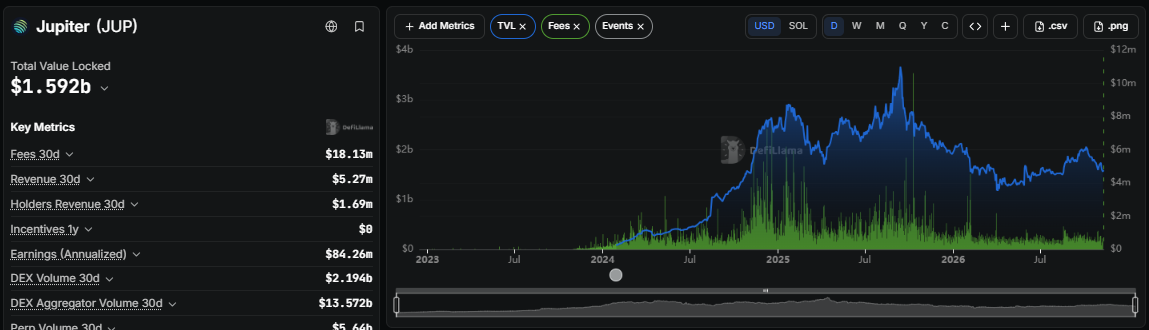
The company said its trading aggregator has processed more than $2 trillion in total trading volume. Its wider ecosystem also holds approximately $1.7 billion in total value locked, according to data from DeFiLlama from early November 2026. However, that figure has dropped to $1.59 billion.
Still, Jupiter wants to use the same approach across other financial services. Instead of focusing only on trading, it wants users to find different assets, invest in them, earn returns and manage their holdings without leaving its platform.
“What Google did for information, Jupiter is doing for assets,” said Kash Dhanda, the company’s chief operating officer.
Dhanda explained that Jupiter started with trading because it was one of the hardest problems to solve on Solana. After building a system that brings different sources of liquidity together, the company believes it can use the same idea for other services.
He also said he hopes Jupiter will become the only money application users need within five years.
Previous Launches Show Jupiter’s Wider Expansion
The four products follow other developments in Jupiter’s ecosystem. In June 2026, the company launched Forecast, a prediction market built on Solana. It allows several market makers to compete by offering prices, with Jupiter selecting the best available quote for users.
In July, Jupiter also added Trailing Stop Loss to its Limit Orders feature. The tool automatically moves a trader’s stop-loss level upward when an asset’s price rises, helping protect profits if the market later falls.
In short, these launches come as more companies build financial products on Solana ahead of Breakpoint. With its latest releases, Jupiter is extending the services available through its platform beyond token swaps and giving users more ways to manage their on-chain assets.
Also Read: DeepSigma Opens $10M Token Offering on Republic for RWA Exchange